An ancient remedy, rediscovered by science
Known across the Mediterranean and the Balkans as Greek mountain tea, or Greek verbena, this golden-flowered herb has been used for centuries to steady the mind and ease age's wear — and modern research is beginning to explain why.
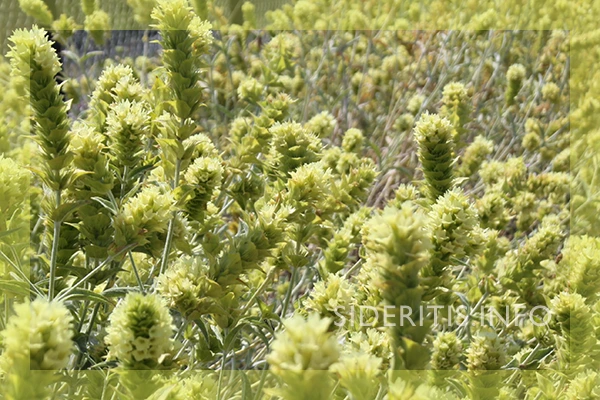
- Family
- Lamiaceae (mint)
- Habitat
- Mediterranean mountains, above 1,000m
- Flower
- Golden yellow
- Leaf
- Grey, felt-like
- Name origin
- sideros, Greek for iron — traditionally used to heal wounds from iron weapons
A plant with more than a hundred faces
Considering how widely it grows across the Mediterranean and the Balkan Peninsula, it's almost surprising that Greek mountain tea is only now making its advance into medical research. People in antiquity already understood the effects of this tasty plant.
Traditionally, it was used to lift psychological balance, sharpen mental strength, and stave off the troubles of age. The herb, with over one hundred subspecies, thrives at altitude — always above 1,000 metres.
It contains essential oils, flavonoids (antioxidant plant dyes), phenylethanoids (which regulate cell function and scavenge free radicals), and phenolic acids, known for antibacterial and anticarcinogenic effects.
What the research shows
Numerous studies now provide a scientific basis for its use against several so-called diseases of civilization. Particularly notable is the work of Alzheimer's researcher Prof. Dr. Jens Pahnke, whose early experiments on Alzheimer's-affected mice showed promising results — echoed since by positive feedback from human patients.
Its use isn't limited to Alzheimer's. In 2010, a private research institute in Germany patented extracts of the plant as a serotonin reuptake inhibitor for treating depression, anxiety disorders, obsessive-compulsive disorders, panic attacks, and attention and hyperactivity disorders.
Current scientific indications
Brewing it well
- Use 5–10g of high-quality Sideritis scardica — bright green stems, golden flowers — per litre of water.
- Start with cold water and bring it to a quick boil.
- Let it brew for 10–15 minutes before serving.
Of the more than one hundred Sideritis subspecies, only Sideritis scardica has shown positive results in research. Many commercial teas don't specify which subspecies they contain — and wild-collected tea can also compromise both purity and the plant's wild populations. For consistent dosing over time, an extract is generally more reliable than brewed tea alone. See sources of supply.