Greek mountain tea extract in Alzheimer's research
Known beyond Germany's borders as the “Alzheimer's hunter,” Professor Pahnke's research into Greek mountain tea has triggered a revival of interest in this centuries-old remedy.
Tackling the causes
Anyone who studies Alzheimer's disease repeatedly encounters Professor Pahnke's publications on Greek mountain tea. In his studies, he found that certain ingredients of the tea don't just slow Alzheimer's progression — they can reverse it, by preventing, dissolving, and reducing plaque deposits in the brain.
These plaque deposits — more precisely, amyloid plaques — are currently considered a leading cause of Alzheimer's disease and dementia. Preventing them is one of the most active research approaches against the disease.
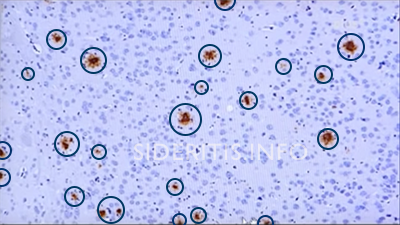
- Before treatment
- Typical Alzheimer's plaque deposits, visible in the mouse brain as small brown dots.
- What they are
- Beta-amyloids (Aβ40 and Aβ42) — protein components with antimicrobial functions that don't normally accumulate.
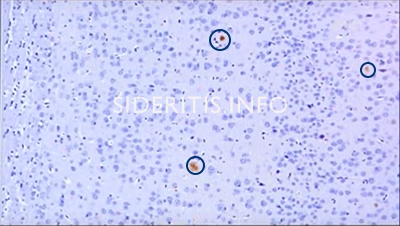
- After 50 days
- Plaque deposits typical of Alzheimer's decreased by 80 percent following treatment with Sideritis scardica extract.
- Why it matters
- Since beta-amyloids also serve important functions, this offers a comparatively safe route to dissolving the plaques.
Use in humans
Recent studies on humans, according to Professor Pahnke, verify the same effect in people affected by Alzheimer's. No side effects of the extract or the tea have been identified, and there's no danger of dependency.
Translating the mouse dosage to humans works out to roughly 4 litres of Greek mountain tea daily while maintaining consistent quality — which is why a standardised extract is preferable for most people. Patient replies are available at pahnkelab.eu/patient-replies (scroll down).
In part 7 of the video series in our Dementia Research section, Professor Pahnke elucidates the latest treatment findings, including patient feedback from Joy P. and the recommended dosage for dementia.
Available products
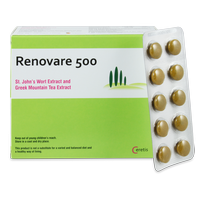
Renovare 500
550mg small film-coated tablets, over-the-counter, containing St. John's wort and Greek mountain tea active ingredients. Provided by Ceretis Ltd.
4 tablets daily recommendedLaif 900 (900mg, prescription-only, provider Bayer Vital GmbH) is a second option built on St. John's wort active ingredients alone.
See sources of supply for where to find both Greek mountain tea and these extracts.